
When It Comes to Melanoma, Timing Matters

Why We Take Melanoma Seriously
Melanoma is the form of skin cancer we take most seriously.
Most skin cancers grow slowly and are highly treatable. Melanoma is different. It has the ability to grow deeper into the skin and spread to lymph nodes and other parts of the body if it is not caught early.
That is not meant to alarm you. It is simply how this cancer behaves.
What matters just as much is the flip side of that. When melanoma is found early, it is often very treatable and, in many cases, curable. When it is found later, after it has had time to spread, treatment becomes more complex and the stakes are higher.
Timing Changes the Outcome
Melanoma can move faster than people expect, which is why we do not like to wait on anything that looks like it could be changing.
When melanoma is found early, before it has spread, outcomes are excellent. When it is found later, after it has moved beyond the skin, the picture changes significantly.
Here is what that looks like in real life:
Found early
While still confined to the skin, the five year survival rate is over 99%
Spread to nearby lymph nodes
That number drops to around 75%
Spread to other parts of the body
It can fall to about 30% to 35%
That difference comes down to timing.
That is why we focus so much on early detection.
How We Look More Closely and Who Benefits Most
In addition to your annual total body skin check at Midwest Dermatology, one of the most useful things we can do is establish a baseline of your skin and then follow it over time.
At Midwest Dermatology, we use FotoFinder to do that.
FotoFinder is a medical imaging system that takes a series of high-resolution photographs of your skin in a very standardized way. Those images become your baseline.
At follow up exams, we are not relying on memory or a quick visual impression. The system allows us to superimpose new images directly over your prior images, so we can see changes in the exact same area of skin over time.
We are able to see precisely what has changed, not just guess at it.
In addition to full body imaging, we can take magnified images of individual moles and monitor them over time. This allows us to evaluate structure and subtle changes that are not visible to the naked eye.
That level of detail matters.
Melanoma does not always stand out early. It often begins as something small, something that looks only slightly different, or something that changes gradually over time.
Those are the cases where comparison is critical.
When we have a baseline and can follow your skin year to year, we are much more likely to detect those changes early, when treatment is simpler and outcomes are better.
This is something anyone can benefit from. It becomes especially important if your risk is higher.
That includes:
• A personal or family history of melanoma
• A history of one or more significant sunburns
• Very fair skin that burns easily and does not tan well, often with light hair or light eyes
• Having more than 100 moles
• Moles that are irregular in shape, color, or size
• A history of tanning bed use
If any of these apply, having a baseline and following it over time can be especially valuable.
If you are interested in getting a baseline, scheduling a FotoFinder exam is straightforward.
These appointments are available in our Papillion office in the Omaha area. You can call to schedule, or book online at midwestderm.com at a time that works for you.
The visit itself is quick and very well tolerated. Most patients are in and out without it disrupting their day.
When Treatment Is Needed
If we do find something that turns out to be melanoma, the next steps are very clear and very structured.
The first step is always a biopsy.
If a mole or spot looks suspicious, we remove a small sample and send it to the lab for a definitive diagnosis. The pathology report tells us exactly what we are dealing with. It also gives us important details about how deep the melanoma is and how active it appears, which helps guide what comes next.
If the melanoma is caught early and is still confined to the skin, treatment is often straightforward.
In most cases, that means a procedure called a wide excision.
It is exactly what it sounds like. We remove the area where the melanoma was found along with a margin of normal appearing skin around it. That margin is not random. It is based on well-established medical guidelines that are designed to remove any melanoma cells that may have spread just beyond what we can see.
Melanoma cells can extend microscopically past the visible spot. By removing an appropriate margin of surrounding skin, we are treating not just what we can see, but what we cannot see.
This is typically done in the office under local anesthesia. The procedure usually takes about an hour, and most patients tolerate it very well.
When melanoma is caught at this stage and treated appropriately, this is where we see those excellent outcomes and very high success rates.
If the melanoma is deeper or shows features that raise concern for spread beyond the skin, we may recommend evaluation with a specialist who focuses on melanoma care.
They will determine whether any additional testing or treatment is needed. That decision is based on your specific case and guided by established protocols.
Our role is to make sure you get to the right place, with the right information, at the right time.
And throughout all of this, you will not be left guessing.
We will walk you through your pathology results, explain what they mean, and talk through the plan in a way that is clear and straightforward.
Just as importantly, we will continue to follow you.
After a diagnosis of melanoma, regular skin exams become an important part of your care. Depending on your history, that may mean annual or more frequent visits, along with consideration of baseline and follow up imaging with FotoFinder.
The goal going forward is simple.
To monitor your skin carefully, catch anything new as early as possible, and give you confidence in what we are seeing over time.
Where to Start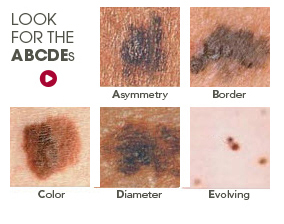
The first step is to schedule a total body skin exam.
You can start with any of our providers. We have seven provider options, six office locations, and hours that are designed to fit a wide range of schedules.
You can call our office at (402) 933-0800 in Omaha and surrounding areas or (402) 371-3564 in Norfolk to schedule or book online at midwestderm.com.
Melanoma is serious.
But it is also one of the clearest examples in medicine where early detection truly changes the outcome.


